The 2026 Hyundai Kona enters the competitive compact SUV market with a fresh design, upgraded technology, and improved practicality. In this 2026 Hyundai Kona Review, the focus keyword highlights a vehicle that prioritizes everyday usability over thrilling performance. While some buyers searching for the hondai kona or even older models like hondai 2021 variants may expect a fun driving experience, the latest version leans more toward comfort and efficiency.
Moreover, the Kona has evolved significantly compared to previous generations. It now offers a roomier cabin, more cargo capacity, and a more refined tech interface. These improvements make it particularly appealing to urban drivers and small families who value convenience and modern features.
However, despite its futuristic styling and upgraded features, the Kona still struggles to deliver an engaging driving experience. Therefore, this article explores whether the 2026 model strikes the right balance between style, practicality, and value and whether it’s worth considering over rivals.
Overview of the 2026 Hyundai Kona and Its Segment Positioning
The 2026 Hyundai Kona sits firmly in the subcompact SUV segment, competing with models like the Toyota Corolla Cross, Mazda CX-30, and Honda HR-V. This category is known for affordability, fuel efficiency, and urban-friendly dimensions.
In this 2026 Hyundai Kona Review, one key takeaway is that Hyundai has repositioned the Kona as a more mature and practical vehicle. Compared to earlier versions (including the hondai 2021 Kona), the latest model focuses less on sporty handling and more on everyday comfort and usability.
Consequently, the Kona appeals to buyers who want:
- A compact footprint for city driving
- Modern styling and tech features
- A comfortable and spacious interior
However, performance enthusiasts may find it lacking. While competitors like the Mazda CX-30 emphasize driving dynamics, the Kona prioritizes a smoother, more relaxed ride.
Exterior Design: Futuristic and Eye-Catching
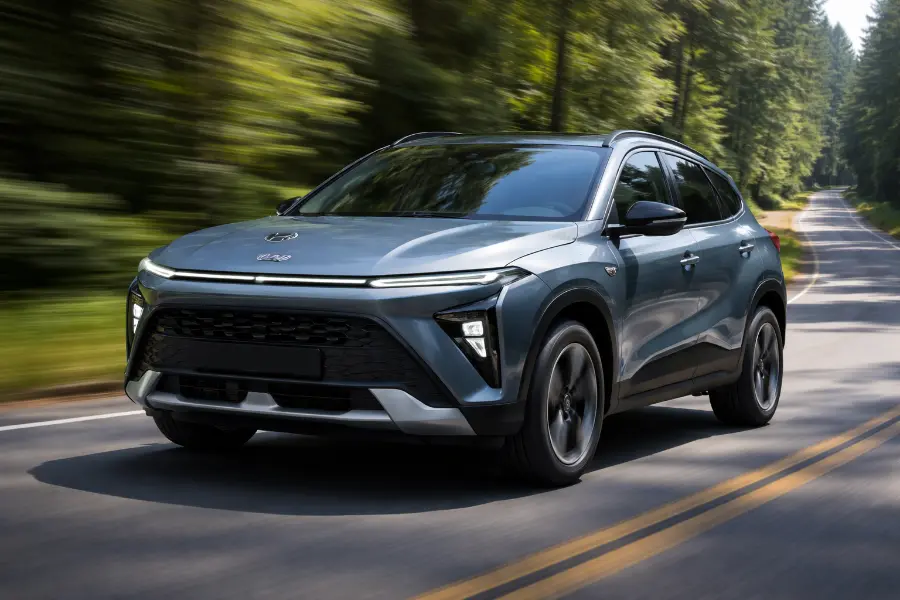
One of the biggest highlights in this 2026 Hyundai Kona Review is its bold exterior design. Hyundai has embraced a futuristic aesthetic, giving the Kona a unique identity in a crowded market.
Key design elements include:
- A full-width LED light bar across the front
- Sharp body lines and sculpted surfaces
- Two-tone color options
- Distinctive wheel designs
Moreover, the Kona’s design feels inspired by electric vehicles, even in its gasoline-powered versions. This gives it a modern and forward-looking appeal.
However, while the styling is undeniably striking, it may not appeal to everyone. Some buyers searching for the hondai kona price may prefer a more conservative design. Nevertheless, the Kona stands out on the road, which is a significant advantage in this segment.
Interior Space and Practicality Improvements
Inside, the Kona has seen major improvements. The cabin is now larger, more ergonomic, and better suited for daily use.
The interior offers:
- Increased passenger space, especially in the rear
- Improved materials and build quality
- A clean, minimalist dashboard layout
Cargo capacity is another strong point. The Kona now provides up to ~63.7 cubic feet of cargo space with the rear seats folded, making it highly practical for:
- Grocery runs
- Weekend trips
- Small family needs
Moreover, the layout is designed for convenience, with well-placed storage compartments and intuitive controls.
Compared to older models like the hondai 2021 Kona, the improvements are significant. Therefore, buyers upgrading from previous versions will immediately notice the difference.
Engine Options and Performance
The Kona offers two engine choices, catering to different driving needs.
Engine Options
- 2.0L 4-cylinder engine (~147 hp)
- 1.6L turbocharged engine (~190 hp)
The base engine is suitable for city driving but lacks strong acceleration. On the other hand, the turbocharged option provides better performance, making highway driving more comfortable.
However, in this 2026 Hyundai Kona Review, it’s clear that performance is not the Kona’s main strength. Even with the turbo engine, it doesn’t feel particularly sporty.
Driving Experience
- Smooth and comfortable ride
- Easy handling for city driving
- Limited driving excitement
Consequently, the Kona is best described as a practical daily driver rather than a performance-oriented SUV.
Fuel Economy and Efficiency
Fuel efficiency remains a strong selling point for the Kona.
Estimated figures include:
- City: ~29 MPG
- Highway: ~34 MPG
These numbers make it competitive within its segment. Moreover, the Kona’s efficiency helps reduce long-term ownership costs, which is a key consideration for budget-conscious buyers.
However, adding all-wheel drive or opting for the turbo engine may slightly reduce fuel economy. Therefore, buyers should choose based on their priorities performance or efficiency.
Technology and Infotainment Features
Technology is where the Kona truly shines. In this 2026 Hyundai Kona Review, the SUV stands out for its advanced features.
Key Tech Features
- Dual 12.3-inch displays (instrument cluster + infotainment)
- Wireless Apple CarPlay and Android Auto
- Bluetooth connectivity
- Optional premium audio system
Moreover, the interface is user-friendly, with quick response times and clear graphics.
Driver Assistance Features
- Adaptive cruise control
- Lane-keeping assist
- Blind-spot monitoring
- Automatic emergency braking
However, some users report that safety alerts can be intrusive. Despite this, the Kona offers one of the most comprehensive tech packages in its class.
Read also: 2026 Audi Q3 Review: Price, Performance, Specs & What’s New
Trim Levels, Pricing, and Value
The Kona offers multiple trims to suit different budgets.
Trim Levels vs Price & Features
| Trim Level | Starting Price | Key Features |
|---|---|---|
| SE | ~$27,100 | Basic tech, safety features |
| SEL Sport | ~$28,275 | Sportier styling, added features |
| SEL Premium | ~$30,025 | Larger displays, premium interior |
| Limited | ~$34,135 | Full features, luxury touches |
The hondai kona price remains competitive, making it an attractive option for buyers seeking value.
Moreover, Hyundai includes generous warranty coverage, which further enhances its appeal.
Pros and Cons
Pros
- Stylish and futuristic design
- Spacious and practical interior
- Advanced technology features
- Competitive pricing and value
Cons
- Lack of sporty performance
- Base engine feels underpowered
- Some ride comfort concerns
- Intrusive safety alerts
Therefore, while the Kona excels in practicality and design, it falls short in driving excitement.
Kona vs Competitors
The Kona faces tough competition in the subcompact SUV segment.
Kona vs Competitors (Performance & Value)
| Model | Power (hp) | MPG (Combined) | Starting Price |
|---|---|---|---|
| Hyundai Kona | 147–190 | ~26–31 | ~$27K |
| Toyota Corolla Cross | ~169 | ~30–32 | ~$26K |
| Mazda CX-30 | ~191–250 | ~26–29 | ~$27K |
| Honda HR-V | ~158 | ~27–28 | ~$27K |
Comparison Insights
- The Mazda CX-30 offers better performance
- The Corolla Cross focuses on efficiency
- The HR-V provides balanced practicality
However, the Kona stands out for its design and technology. Consequently, it appeals to buyers who prioritize modern features over driving dynamics.
Target Buyers: Who Should Consider the Kona?
The 2026 Kona is ideal for:
- Urban drivers needing a compact SUV
- Small families looking for practicality
- Budget-conscious buyers seeking value
- Tech-savvy users who want modern features
However, it may not suit:
- Performance enthusiasts
- Drivers seeking sporty handling
Therefore, understanding your priorities is key before choosing the Kona.
Final Verdict
In this 2026 Hyundai Kona Review, the SUV proves to be a well-rounded, practical, and stylish option in the subcompact segment.
It excels in:
- Design
- Interior space
- Technology
- Value
However, it lacks excitement behind the wheel. Consequently, it’s best suited for everyday driving rather than spirited performance.
For buyers comparing options like the hondai kona or even older models such as hondai 2021, the 2026 version represents a significant upgrade in comfort and features.
FAQs
1. Is the 2026 Hyundai Kona worth buying?
Yes, it’s a great choice for buyers seeking a stylish, practical, and tech-loaded compact SUV at a competitive price.
2. How powerful is the Kona engine?
It offers up to 190 horsepower with the turbo engine, though the base engine is less powerful.
3. Is it fuel efficient?
Yes, it delivers up to ~34 MPG on highways, making it efficient for daily use.
4. How does it compare to rivals?
It stands out in design and technology but falls behind competitors like the Mazda CX-30 in performance.
5. Is it good for daily driving?
Absolutely. Its comfortable ride, compact size, and advanced features make it ideal for everyday use.